









Product Introduction
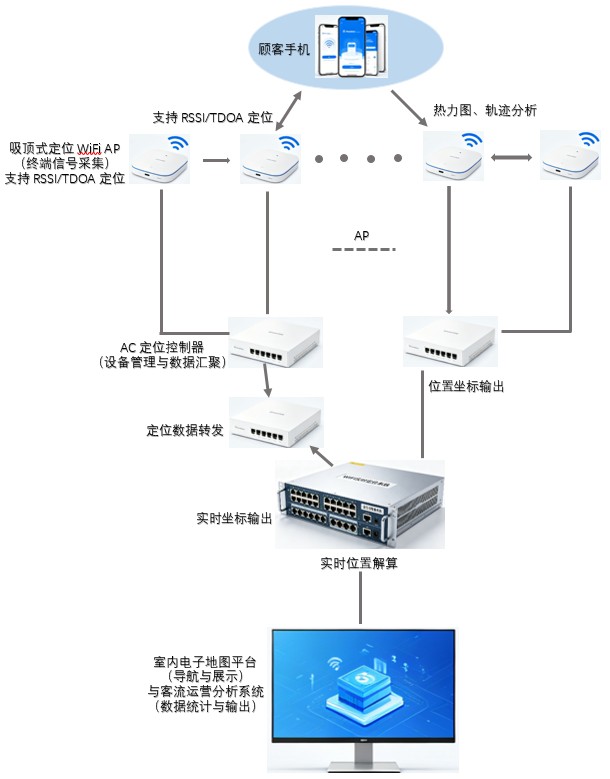
◆Pure WiFi independent networking without additional auxiliary equipment, simplifying deployment and reducing project investment
◆Triangulation positioning combined with optimization algorithm ensures accurate and stable positioning, low latency, and adapts to the accuracy requirements of multiple scenarios.
◆Modular design, equipment can be flexibly expanded without large-scale modification of the original system
◆POE integrated power supply, convenient wiring, simple operation and maintenance, no need for professional team to be on-site
◆Compatible with mainstream terminals and operating systems, supports docking with existing management systems, and has strong adaptability
◆Industrial-grade equipment standards, wide temperature adaptation, anti-interference, can cope with complex indoor environments
Technical Parameters
Parameter category | Specific parameters | Detailed specifications |
Positioning performance parameters | Positioning accuracy | Normal scene 1-3m, optimized scene (increasing AP density) can reach within 1m |
Positioning delay | ≤300ms, real-time dynamic update, no lag in trajectory tracing | |
positioning protocol | Supports 802.11k/v/r protocol, passive probe collection, RSSI ranging, and is compatible with mainstream positioning AP protocol standards on the market | |
Positioning method | Triangulation positioning, supports 2D/3D positioning (3D positioning needs to be configured with air pressure sensor or floor information) | |
Terminal capacity | A single positioning server supports ≤500 positioning terminal tags online at the same time | |
Track storage | Supports positioning track storage for ≥90 days, can be exported and queried, and meets the compliance and traceability needs of most industries. | |
Positioning blind spot | There are no obvious blind spots. When the AP deployment density is reasonable, the indoor coverage rate is ≥99%, adapting to regular indoor scenarios. | |
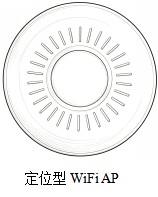
Core equipment parameters - Positioning WiFi AP | Working frequency band | 2.4GHz/5GHz dual frequency band, supports WiFi 5 and above standards, and is compatible with mainstream WiFi devices on the market |
Transmit power | 10-20dBm, manually adjustable | |
Receive sensitivity | ≤-95dBm | |
interface | 1 Gigabit Ethernet port (supports POE power supply) | |
working temperature | -40℃~75℃ (industrial grade), humidity 10%~90% (no condensation) | |
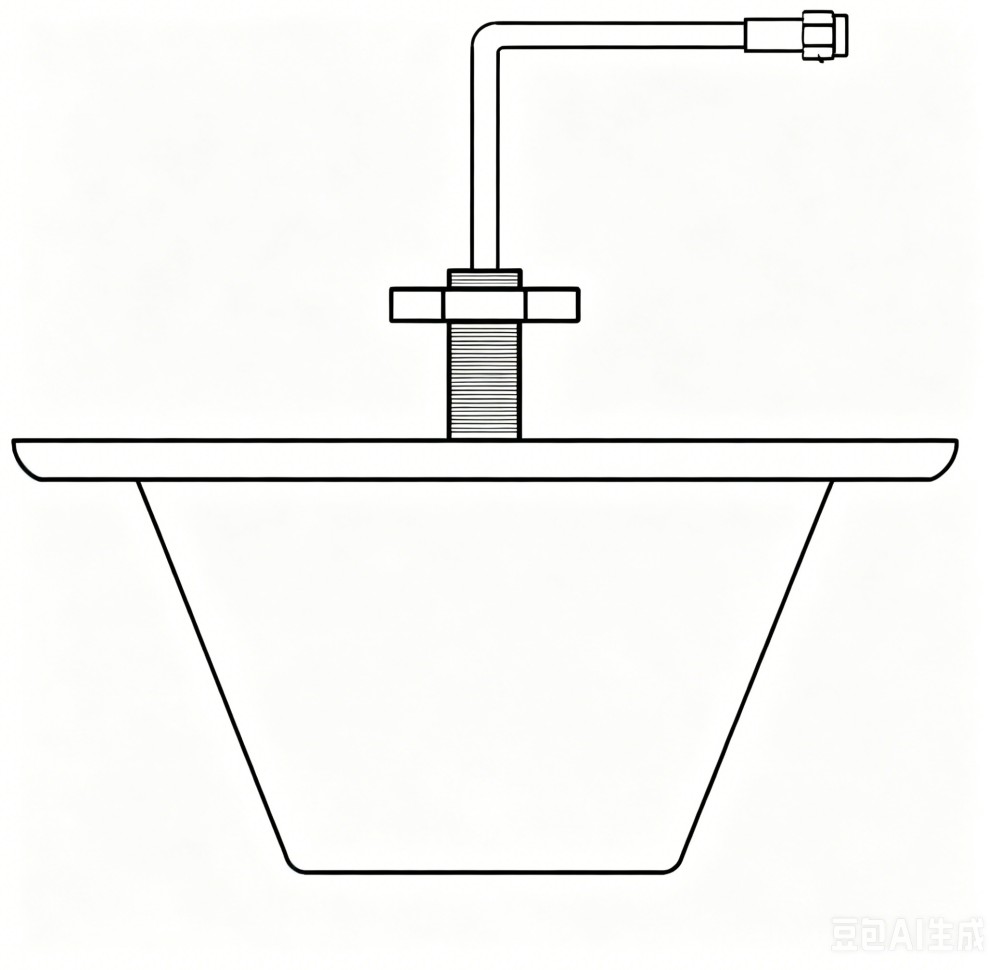
antenna | Built-in omnidirectional antenna, gain ≥5dBi | |
Function | Supports passive probe collection, signal strength detection, anti-interference frequency hopping, and can simultaneously achieve basic WiFi coverage, taking into account positioning and network requirements. | |
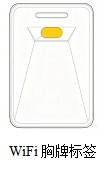
Core device parameters - WiFi positioning terminal label | people tag | WiFi badge label, size ≤80mm×50mm×15mm, weight ≤50g |
Asset tag | WiFi active tag supports active broadcast of WiFi frames, and the broadcast interval is adjustable (1-10s) | |
Battery life | Personnel tag ≥ 7 days (standby), asset tag ≥ 6 months (standby, rechargeable/replaceable battery) | |
Working frequency band | 2.4GHz, supports 802.11b/g/n protocol | |
Protection level | ≥IP65 (asset tag), IP54 (personnel tag) | |
Adaptability | It is compatible with all positioning WiFi APs and can be quickly identified and collected by APs without compatibility barriers. | |
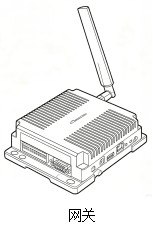
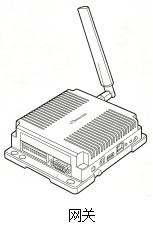
Core device parameters - positioning server/gateway | CPU | ≥Intel Core i5 (or equivalent industrial-grade processor) |
Memory | ≥8GB DDR4, support expansion to 16GB | |
storage | ≥500GB SSD (location data storage) | |
operating system | Supports Windows Server and Linux industrial version, compatible with mainstream server operating systems on the market | |
Positioning algorithm | Supports RSSI fingerprint algorithm and triangulation positioning algorithm, can be upgraded and optimized | |
interface | ≥2 Gigabit Ethernet ports | |
Function | Supports data collection, coordinate calculation, trajectory presentation, equipment management, and abnormal warning, covering the entire positioning process requirements. | |
Core equipment parameters - POE core switch | Number of ports | 8 ports/16 ports/24 ports optional (configured according to the number of APs) |
POE power supply standard | IEEE 802.3af/at, single port power supply ≤30W | |
Transmission rate | Gigabit port, supports line speed forwarding | |
working temperature | -20℃~60℃, humidity 10%~90% (no condensation) | |
Protection level | IP30 (rack mount), dust and moisture proof | |
Function | Supports POE power supply, data aggregation and forwarding, port speed limit, fault detection, and has over-current and over-voltage protection to ensure safe operation of the equipment. | |
Core equipment parameters - power supply package | POE power supply module | Input voltage AC 220V, output voltage DC 48V, power ≥120W (configured according to the number of APs) |
Backup power | Optional UPS backup power supply, continuous power supply for ≥2 hours after power outage | |
Power supply distance | ≤100m | |
Network parameters | Networking method | Star networking |
Transmission distance | ≤100m between AP and switch, ≤100m between switch and positioning server | |
Anti-interference ability | Supports intelligent frequency hopping to avoid co-channel interference and packet loss rate <0.01% | |
Roaming switch | Supports seamless roaming, switching takes less than 20ms | |
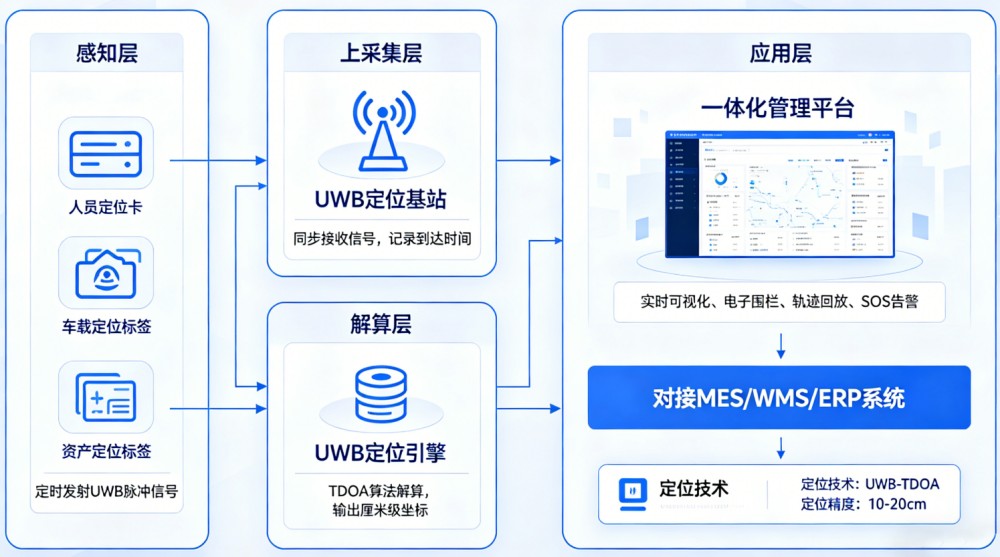
System compatibility | Supports docking with industrial management systems such as MES and SCADA, opens API interfaces, realizes data sharing, and adapts to existing industrial systems |